
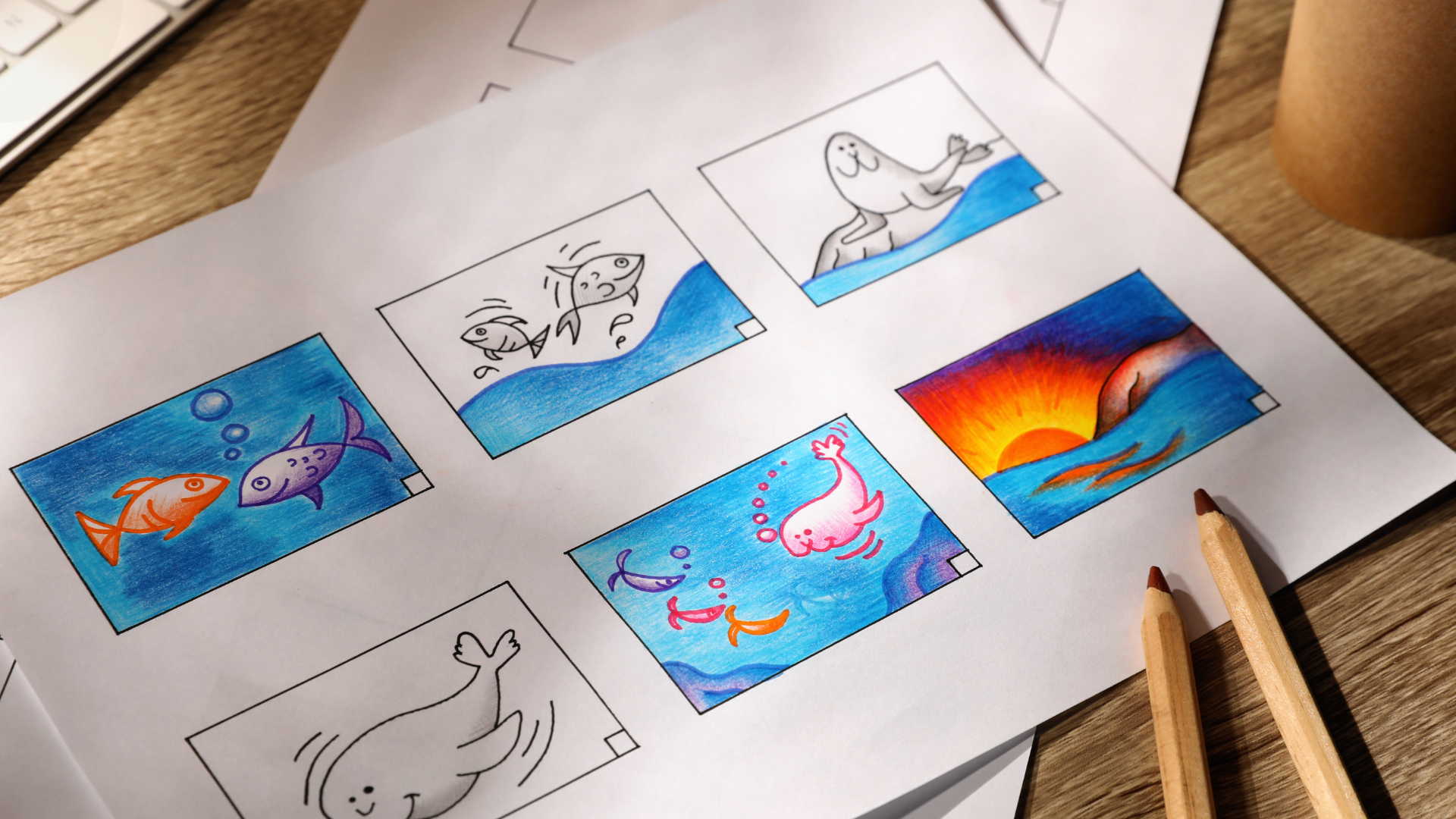
Storyboarding for Animation is one of the most essential skills in today’s animation, film, and motion-graphics industries. Whether you dream of working in TV animation, creating cinematic YouTube videos, developing your own comic series, or breaking into professional studio pipelines, mastering storyboarding for animation gives you a clear advantage. This comprehensive course walks you through every core concept—from narrative structure to cinematic framing—so you can turn ideas into compelling visual sequences.
Storyboarding for Animation doesn’t just teach drawing. It teaches thinking like a filmmaker. You’ll learn how to plan, visualize, and structure your ideas in a way that makes sense to directors, clients, collaborators, and audiences. Through practical modules, real-world style lessons, and industry-focused insights, you learn how to communicate stories efficiently and creatively.
If you’ve ever watched an animated movie and wondered, “How did they plan this scene?” or “How do storyboard artists turn scripts into visuals?”—this course reveals it all. And because storyboarding is one of the most universally used skills in animation, this course gives you a foundation you can rely on no matter what style, genre, or career direction you pursue.
Best part? This is a low-commitment course in a limited run. Once this session closes, it may not open again. If you’ve been waiting for a sign to finally start learning storyboarding, this is it.
The Storyboarding for Animation course is designed from the ground up to help absolute beginners, aspiring artists, and developing animators learn how to construct strong, clear, cinematic storyboards. Across six detailed modules, you’ll build a complete understanding of professional storyboarding workflows using accessible, beginner-friendly teaching.
The course starts by breaking down what storyboards actually are and why they’re essential for any animation pipeline—from indie projects to high-budget studio productions. You’ll learn how storyboard artists serve as visual planners, problem solvers, and cinematic translators, turning written concepts into visual sequences that guide production teams.
From there, you’ll explore narrative design and story development, gaining a stronger grasp of how to shape stories that audiences care about. You’ll learn the basics of storytelling structure, emotional beats, pacing, tension, and clarity. In the world of storyboarding for animation, strong story sense is just as important as drawing skill.
The course then moves into the visual side, teaching you how to develop thumbnails—quick, rough sketches that allow you to explore ideas rapidly. You’ll practice breaking ideas into panels, mapping out actions, and shaping the flow of a sequence. Thumbnailing is the heartbeat of storyboarding, and you’ll learn how to use it to work faster and more creatively.
Next, you’ll dive into shot types and framing. This is where storyboarding for animation becomes cinematic. You’ll learn how visual composition influences mood, emotion, and clarity. You’ll understand when to use wide shots, close-ups, over-the-shoulder shots, and more. By studying framing, you’ll learn how to guide your audience’s attention effortlessly.
Then comes camera movement and blocking—two pillars of visual storytelling. You’ll learn how to plan dynamic shots, track characters, guide action, and build rhythm through camera choices. Whether you’re planning a chase scene, a quiet conversation, or a dramatic reveal, you’ll understand how camera motion impacts storytelling.
Finally, you’ll explore visual storytelling techniques used across the animation industry. This includes staging, silhouette clarity, character posing, key emotional beats, continuity, and sequencing. You’ll build a full set of professional skills that help you create storyboards that feel alive, intentional, and cinematic.
This isn’t just a technical course. This is a creative deep dive into the art and craft of storyboarding for animation, designed to make your storytelling strong, your visuals clear, and your ideas more powerful.
And because this is a low-commitment, limited-offer course, you can learn at your own pace while still gaining skills that last a lifetime.
This Storyboarding for Animation course is intentionally created to be accessible, welcoming, and valuable to a wide range of learners. If you fall into any of the categories below, this course is designed for you.
If you want to work in animation—TV, film, YouTube, or web series—storyboarding for animation is one of the most necessary skills you can develop. Nearly every animation studio relies heavily on storyboard artists to plan scenes, clarify scripts, and determine pacing and motion. This course gives you a foundation that helps you become a stronger animator and storyteller.
You don’t need to be a professional artist to start storyboarding. If you enjoy sketching, doodling, or drawing characters, this course helps you apply your creativity to a structured, cinematic process. Even simple drawings can make great storyboards if you understand framing, shot types, and storytelling flow.
Storyboarding is an essential step in motion graphics and advertising. If you create graphics, intros, transitions, or explainer videos, storyboarding for animation allows you to plan your sequences clearly before animating—saving time and improving results.
If you work with live-action filmmaking or video production, storyboarding helps you plan shots, organize ideas, and present concepts to clients or teams. This course covers universal cinematic principles that apply across both animation and film.
If you’re developing your own animated project, comic, web series, or game, this course helps you structure and visualize ideas. Solo creators benefit immensely from knowing how to plan scenes efficiently.
If you’re young and exploring animation or visual storytelling as a potential career, storyboarding for animation is the perfect introduction. It’s simple to start, doesn’t require expensive software, and builds critical thinking, storytelling, and creative discipline.
Some learners join simply because they love animation and want to understand the process behind it. If you love behind-the-scenes content, making-of documentaries, or want to see what happens before scenes get animated, this course is for you.
Storyboarding for animation is the process of visually planning scenes through sequential drawings called panels. These panels map out action, dialogue, movement, camera angles, and emotional beats. It’s like creating a comic version of the entire project to guide the animation team.
Not at all. Storyboarding for animation focuses more on clarity, composition, and storytelling than on detailed artwork. Even stick figures can communicate ideas well when you know what you’re doing.
No. You can use paper, pencils, or any free drawing app. The principles and techniques taught in this course work with any tool.
This is a low-commitment, self-paced course. You can learn at whatever speed feels comfortable, whether that’s over a few days or a few weeks.
While the focus is on storyboarding for animation, the skills apply to filmmaking, motion graphics, game development, comics, visual scripting, and advertising.
Yes. This specific version of the Storyboarding for Animation course is available for a limited period and may not be offered again. If you’re interested, now is the time to join.
Yes. The lessons include industry-inspired methods used by storyboard artists in animation studios, production houses, and creative agencies.
Definitely. Every module is designed with beginners in mind, gradually building skills from basic concepts to advanced techniques.
Below is an extended overview of the modules, written to reinforce the course value and enhance keyword density.
In this opening module, you’ll learn what storyboards are, why they are essential, and how they fit into the animation pipeline. You’ll explore the role of a storyboard artist, the stages of production, and how visual planning impacts the final animation. If you’ve never studied storyboarding for animation before, this module gives you all the context you need.
This section teaches you how to turn raw ideas into structured narratives. You’ll learn about the three-act structure, emotional beats, character-driven storytelling, and how to craft sequences that feel meaningful and engaging. Storyboarding for animation starts with strong storytelling, and this module helps you build that foundation.
Here, you’ll learn how to take your ideas and put them on paper quickly. Thumbnailing helps you experiment with different frames, angles, and compositions without worrying about detail. You’ll practice translating concepts into visual sequences—a core part of storyboarding for animation.
From wide shots to close-ups, from dramatic angles to quiet compositions, this module teaches you the visual language of cinema. You’ll learn how to use framing to direct attention, convey emotion, and guide storytelling.
This module explores motion—both camera motion and character movement. In storyboarding for animation, this is how you create flow, excitement, tension, and rhythm. You’ll learn pans, zooms, tracking shots, and staging characters within a scene.
The final module brings everything together. You’ll study silhouette clarity, gesture poses, continuity, staging, composition, and how to build sequences that feel alive and cinematic. This is where your storyboarding skills mature and become professional.