
Key Takeaways:
- Major Digital Transformation: The apps have fundamentally reshaped consumer behavior, evolving into a complex, trillion-dollar global delivery economy.
- Key Enablers and Features: Adoption was driven by GPS-enabled smartphones, digital payments, and scalable cloud infrastructure, enabling a centralized restaurant marketplace and real-time order tracking.
- Significant Market Growth: The global market is projected to expand from $1.22 trillion in 2024 to $1.92 trillion by 2029 (9.49% CAGR), fueled by high-frequency consumer demand for convenience and variety.
- Challenges and Criticism: The system is criticized for contributing to public health risks (increased fast-food consumption), generating a large environmental footprint (single-use plastics), and creating economic instability for gig workers.
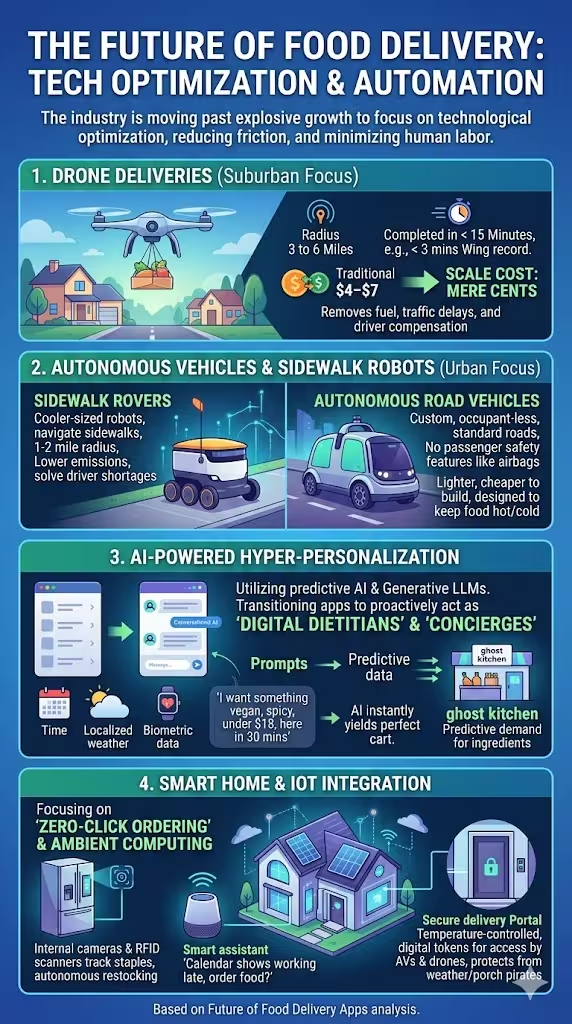
- Future Trends: Optimization will rely on technology, focusing on drone deliveries, autonomous vehicles (rovers), AI-powered hyper-personalization to act as a “digital dietitian,” and IoT integration for “zero-click ordering”.
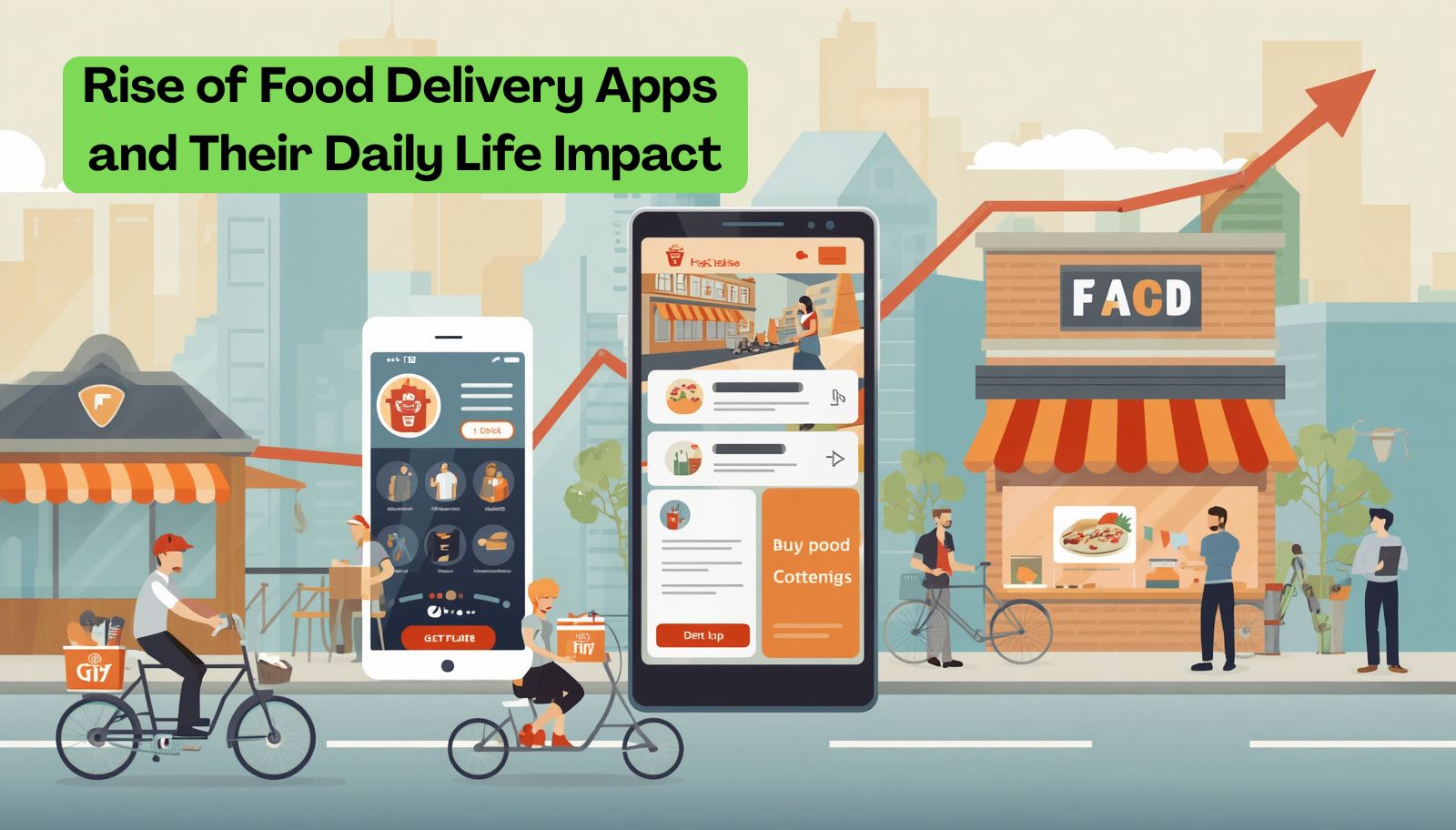
The rise of food delivery apps has significantly changed how and when people buy meals nowadays. This lifestyle change, spurred by online food ordering businesses, is a notable shift in the ecosystem of the delivery economy.
This trillion-dollar digital ecosystem, which was once limited to phone calls, paper menus, and a few local takeaways, now operates on algorithmic matching, real-time logistics, and mobile internet.
But is the shift only about convenience? NO!
It reflects deeper lifestyle changes, shifts in consumer behavior, and the emergence of a powerful delivery economy. All these shifts and changes connect restaurants, drivers, platforms, and customers in real time.
Let’s find out where the rise of food delivery apps is headed and how much impact we can expect.
Table of Contents
Before the Rise of Food Delivery Apps
Restaurants relied on phone-in orders and other direct ordering methods before online food ordering. Brands would distribute printed menus locally, in specific areas, and deliver to customers in delivery zones. But that would be strictly limited by the capacity of in-house delivery staff.
Pizza chains were among the earliest adopters of structured delivery systems. However, the process was still manual, slow, and geographically restricted. Customers needed the paper menu at hand or had to know the restaurant’s phone number. Then, they would need to place an order verbally and wait for their food with no real-time tracking or logistical updates.
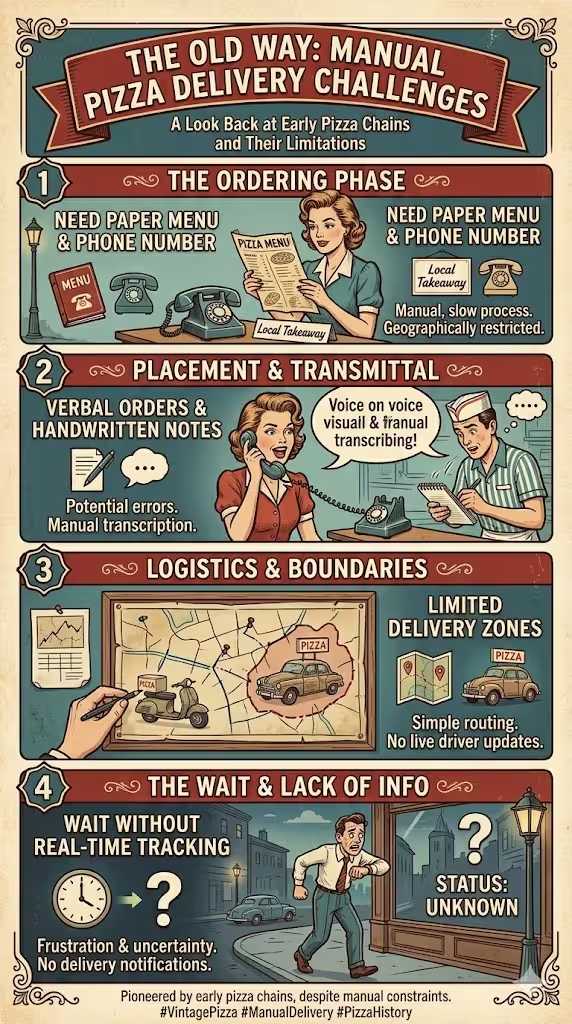
There was no real-time visibility, no digital payment integration, and no centralized system for comparing restaurants. This fragmented system led to miscommunications and inefficiencies for both customers and businesses, eventually adding up costs.
Birth of Food Delivery Apps
Food delivery apps started gaining widespread adoption because of three technologies:
- GPS-enabled smartphones,
- Easy and quick digital payment gateways and
- Scalable cloud infrastructure.
Platforms like Uber Eats, DoorDash, Deliveroo, and Grubhub introduced a unified, multi-sided marketplace model. This was built on a simple yet revolutionary value proposition:
➡️“All restaurants, one app, one delivery system.”
Centralized Marketplace
Instead of calling individual restaurants, users could browse dozens or hundreds of options in one place. If you visit Uber Eats or FoodPanda, you will notice many restaurant names across various areas appear on your app screen. From there, you can choose the menu of your choice.
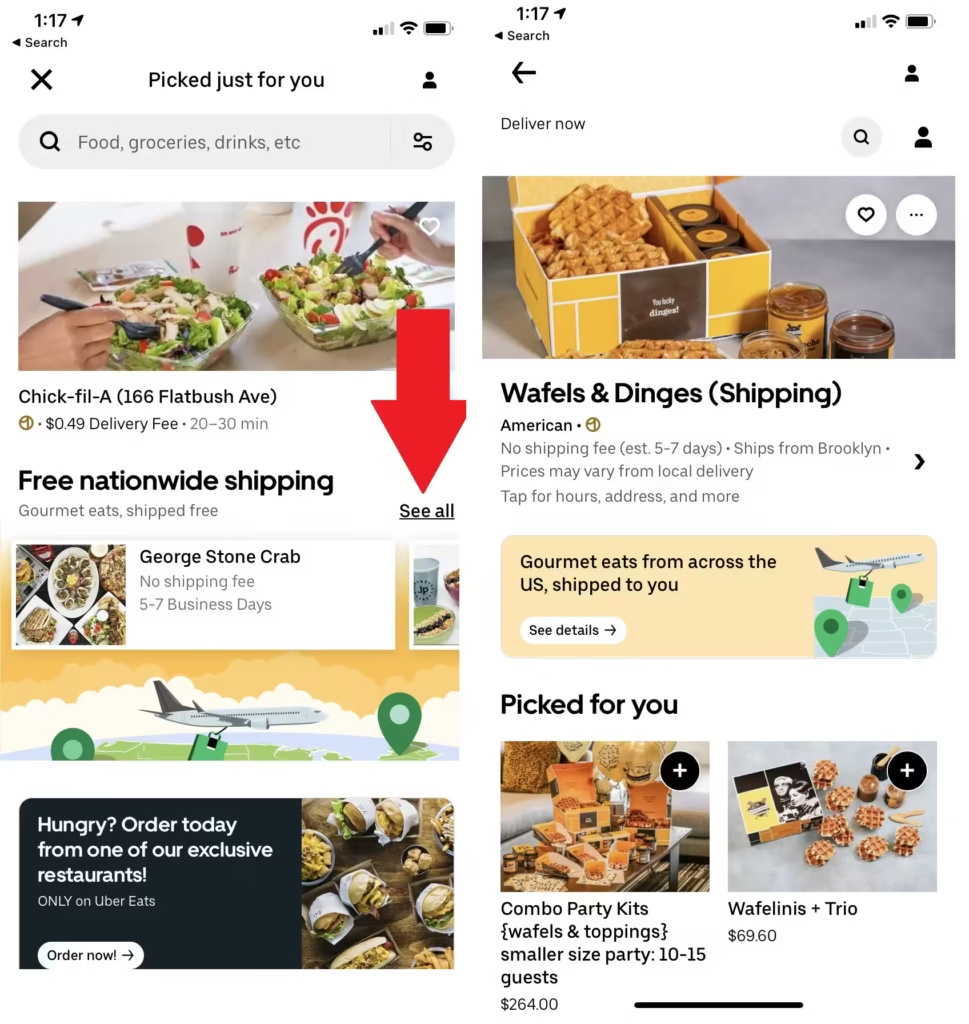
This user experience has been improved by a scalable cloud infrastructure, which enables delivery apps to offer more features and options. And users can access information from anywhere, anytime, aligned with their area or location.
Digital Payments
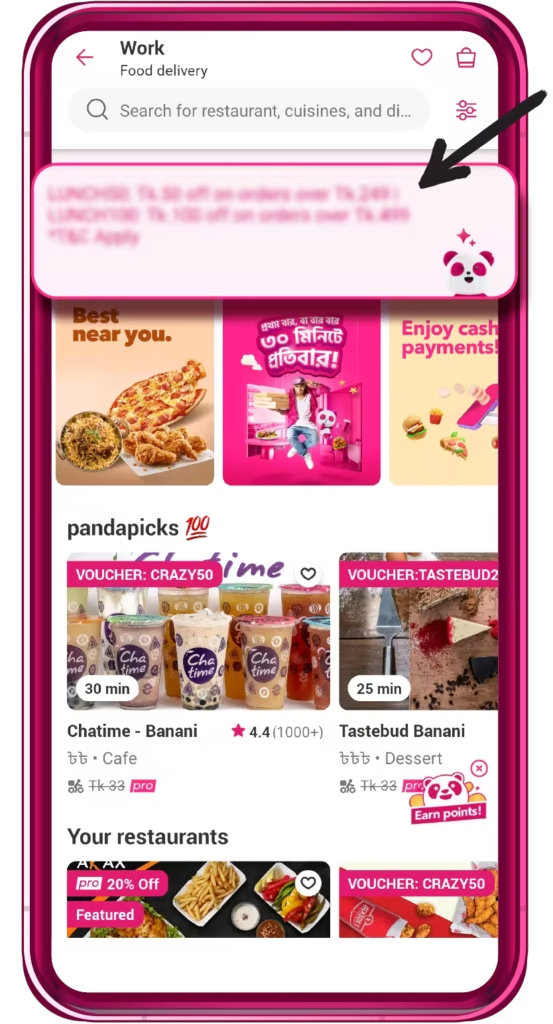
You can simply select the option of digital payments via these online food apps. The option occurs before you check out and make the payment. The easy and quick payment gateways have also encouraged the providers to offer different discounts and benefits to the customers during purchase.
Real-Time Tracking
Thanks to GPS-enabled smartphones, when you finalize the order and make your payment, the online food app adds a tracker to your order. The tracker shows what status the delivery is in. It starts from the acceptance of your order to the final delivery of the item to you.
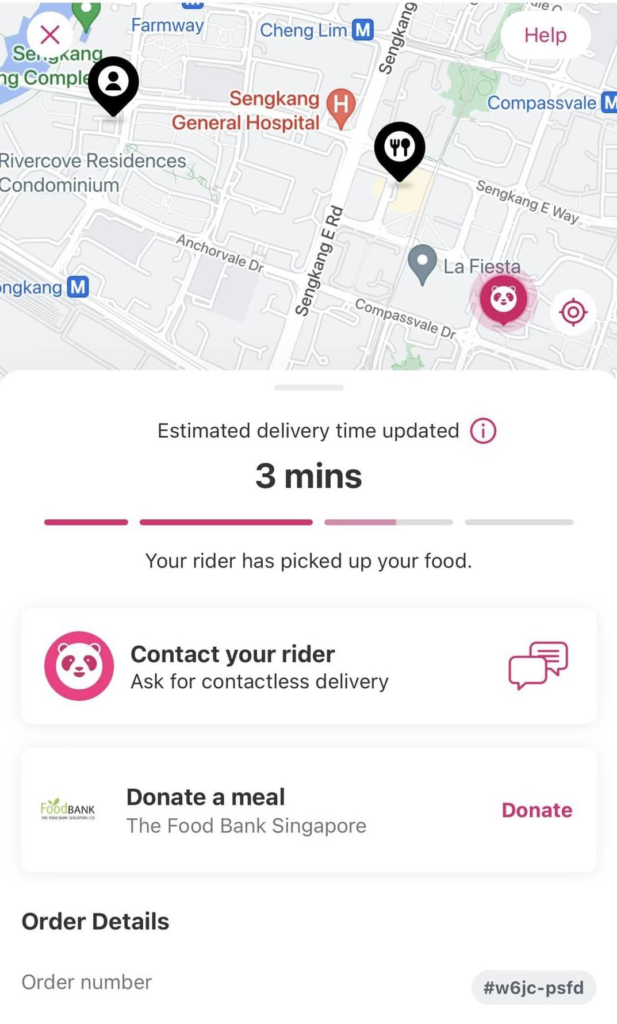
It even shows the whereabouts of the rider’s travel from the pickup point to your place.
Market Capitalization and Growth Trajectories
The online food delivery economy has experienced noticeable growth, driven initially by organic consumer appeal and then further accelerated by the social distancing during the COVID-19 pandemic.
This situation positioned these platforms as a major lifeline for the hurting restaurant industry. Moving forward, the sector is poised to remain a permanent fixture in the global dining landscape.
According to global industry forecasts, the online food delivery market is projected to experience a compound annual growth rate (CAGR) of 9.49% between 2024 and 2029, expanding from a projected global valuation of $1.22 trillion to an astonishing $1.92 trillion.
Alternative long-term projections estimate that the market, valued at $354.28 billion in 2022, could reach $2.15 trillion by 2030, growing at a 10.3% CAGR. In the United States alone, the overall online food delivery market reached a valuation of approximately $353.3 billion in 2024, with the specific ready-to-eat meal delivery segment accounting for about $95 billion.
Global and Regional Food Delivery Market Valuations and Projections
| Market Scope | Baseline Valuation (Year) | Projected Valuation (Year) | Compound Annual Growth Rate (CAGR) |
| Global Market (Statista) | $1.22 Trillion (2024) | $1.92 Trillion (2029) | 9.49% |
| Global Market (Grand View) | $354.28 Billion (2022) | $2.15 Trillion (2030) | 10.3% |
| United States (Overall) | $353.3 Billion (2024) | N/A | N/A |
| United States (Meal Segment) | $95.0 Billion (2024) | N/A | N/A |
| China (Overall) | $42.5 Billion (2022) | N/A | N/A |
Despite these massive revenue figures and the undeniable consumer demand, the underlying economic structure of the delivery economy remains highly volatile. The industry is inherently cost-intensive, low-margin, and heavily dependent on achieving massive scale. Achieving sustainable profitability requires:
- minimizing consumer fees to drive volume,
- maximizing restaurant commissions to drive revenue, and
- optimizing gig worker compensation to maintain the logistical fleet.
Changes in Consumer Behavior and Demographics
The impact of COVID-19 and upgrades to new technologies triggered changes in consumer behavior. The success of the delivery economy is deeply aligned with the psychological changes of modern consumer purchasing patterns. The rise of food delivery apps has fundamentally altered how consumers perceive value, time, and culinary access.
The adoption of online food ordering is now a highly frequent, normalized routine of the consumer. A comprehensive survey of U.S. consumers highlights this:
- 70% of respondents had ordered food delivery within the past month,
- A remarkable 49% reported placing repeat delivery orders at least once a week.
- 33% of consumers indicated they were ordering more deliveries in 2024 compared to the previous year
Financially, this high-frequency behavior shows a significant portion of consumer discretionary spending. The average American consumer spends over $1,566 annually on food delivery services, allocating approximately 3.7% of their annual income to having meals brought directly to their doorstep. With an average basket size of $35.42, this equates to consumers ordering approximately 3.7 times per month.
Popularity of Food Delivery Apps
Thanks ot lifestyle changes of young adults like Millennials and Gen Z, online food delivery apps have found rising preference. The prioritization of convenience, coping with a fast-paced lifestyle, searching for better, affordable pricing, and a variety of choices have all boosted the growth and popularity of online food purchases.
According to demographic research, 40% of Generation Z and Millennials order from food delivery applications at least once a week
Convenience Above All
To cope with tight work schedules, long commuting times to the office, and digital distractions triggered by mobiles, people want to reduce the time they spend cooking or even dining out. With a few simple taps on a screen, consumers can now enjoy food deliveries without much effort.
As long as the roads are clear and the preferred restaurant or cafe’s business is going smoothly, consumers just need to wait a bit to get their food at their doors, thanks to food delivery apps. No spending hours on proactive meal planning, grocery shopping, cooking, and then cleaning.
Variety and Choice
The food apps gave users access to different types of food choices across various restaurants and cafes. Consumers no longer need to visit places to check out menus and compare. Just a few clicks on the app and they get access to all they need.
One gets access to high-value food chains and cheaper local options, all at the same time. This makes hosting events or parties at home or office much easier and convenient, as one can tailor their preferred meals accordingly without too much physical effort. From international cuisines to local street food, consumers get it all!
Discounts and Promotions
Aggressive marketing strategies by brands like Uber Eats or FoodPanda played a huge role in adoption. The partner restaurants and food chains offer coupons and discounts across their menus, for special days, occasions, purchase methods, and even areas.
Some popular offers include:
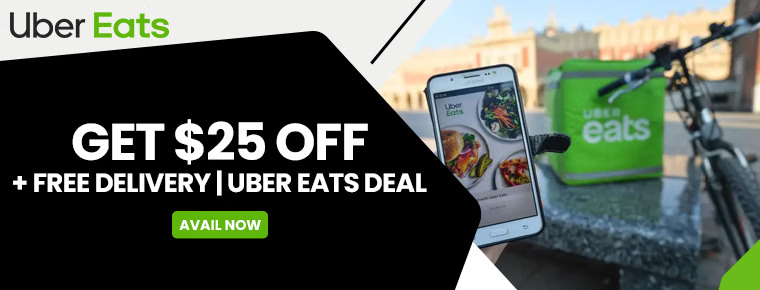
Free delivery offers: If you subscribe as a premium member, platforms offer free delivery, either for a limited time or for life.
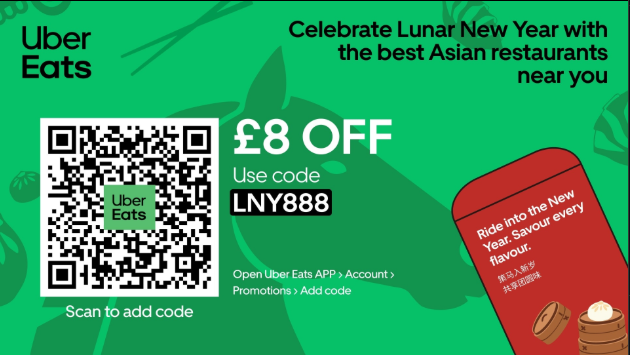
First-order discounts: Many platforms offer major discounts on your first order with them. This could be via a coupon code or simply an automated discount on purchase.

Seasonal or special day deals: These offers let you enjoy discounts during particular seasons, months, or days.
Combo Offers: You can enjoy savings on fees by combining orders from the same restaurant in one particular location. These grouped deals let you select combo options as well.
Urbanization and Busy Lifestyles
As more people move to urban cities to work, work schedules and the volume of work are drastically increasing. People are becoming busier, and companies are offering roles remotely to avoid office setup costs. These circumstances have also driven the popularity of food delivery apps to another level.
For example, the widespread normalization of remote work strongly complements the delivery economy. Employees can sit at their desks and order via food delivery apps. This facilitates uninterrupted lunch breaks and minimizes disruptions caused by mid-day food prep.
Also, with so many freelancers and remote workers working after midnight, the delivery apps allow users to easily find full meals after midnight or in the early morning hours. This is fundamentally changing expectations around traditional restaurant operating schedules.
Reviews and Ratings
Consumers can check other users’ ratings for different eateries and restaurants and decide on their order. One can get a good idea about how well a restaurant is perceived. And whether they should make a purchase from there or not.
Though new cuisines or menus may not get accurate reviews due to a lack of tries. So one must analyze reviews properly before concluding about a food item.
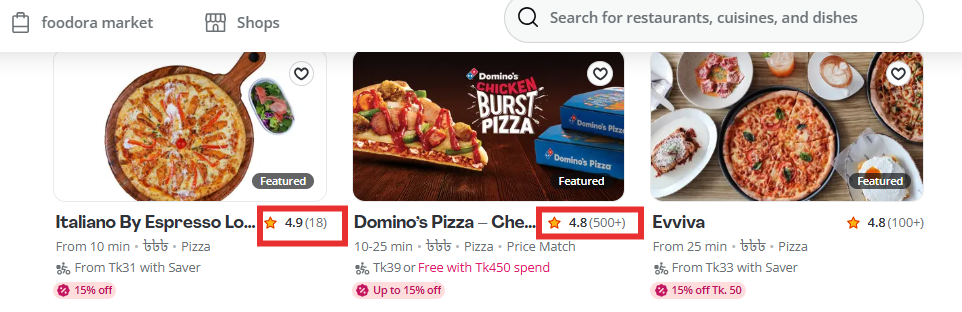
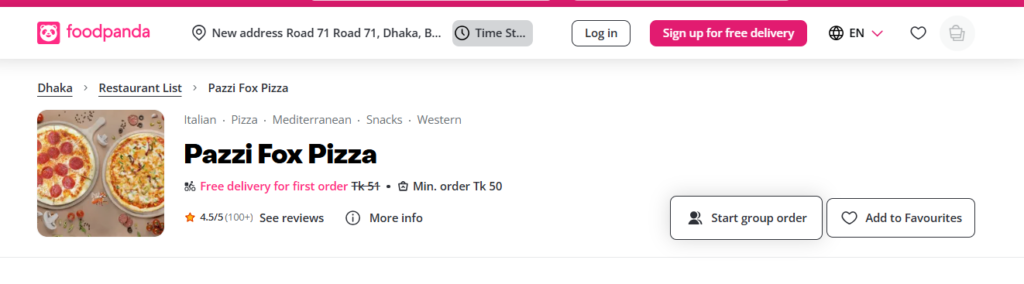
As you can see from the above image, 4.9 stars from 18 reviews most probably won’t be as accurate as 4.8 stars from 500+ reviews.
Challenges and Criticism
Despite its success, the system is not without issues. These issues impact consumers’ daily food habits, health concerns, environmental impact, economic complexities, and unhealthy market competition.
Food Consumption:
Consumers get access to a variety of food options across various types of restaurants and cafes. However, the chances of these foods being as healthy as home-made food are obviously less. Thus, health issues may arise from these consumptions.
Also, with very little to no cooking or physical effort required, people tend to consume more and move less. In a country like the US, the most frequently ordered items via food apps include French fries, quesadillas, and mozzarella sticks.
Health Concerns
Increased reliance on fast food can contribute to:
- Poor diet quality
- Increased calorie intake
- Reduced cooking habits
- Little physical movements
- Consistency in overconsumption
All these trigger significant health issues related to obesity, diabetes, heart diseases, digestive tract problems, and even life-threatening conditions like cancer. Research also shows that the psychological element of instant gratification from “emotional eating”, where individuals enjoy quick delivery of comfort food, acts as a digitally enabled coping mechanism for stress. However, this is not medically healthy and creates cycles of consumption and guilt.
Environmental Impact
The delivery economy operates with a massive, highly visible environmental footprint. The sheer volume of individual, small-batch orders generates unprecedented levels of single-use plastic, styrofoam containers, plastic cutlery, and cardboard packaging waste. This significantly contributes to global plastic pollution and environmental degradation.
Moreover, in the quest to fulfill quick meal deliveries, riders, to some extent, spur traffic congestion. This also increases carbon emissions and contradicts global climate change mitigation goals.
Economic Factor
Because of the high requirement of gig workers like the delivery personnel or food riders, one can claim that online food systems offer a scope of work. However, this same requirement leads to:
- Income instability
- Long working hours
- Lack of benefits
- Work-related stress and burnout
Eventually, this comes back to haunt the food chains as turnover increases, slowing down processes. Resulting in improper order management that triggers consumer dissatisfaction.
Unhealthy Market Competition
As restaurants become increasingly reliant on delivery algorithms for monetization, they are practically forced to adapt their menus, eliminating delicate, complex, or regionally authentic dishes in favor of standardized items that package easily and travel well. This competitive, instant food culture replaces authentic, culturally rich dining experiences with standardized, app-friendly commodities made solely for logistical efficiency.
Future of Food Delivery Apps
The food delivery industry has moved past its explosive, pandemic-era growth phase and entered an era of aggressive technological optimization. Platforms like DoorDash, Uber Eats, and Meituan will now have to rely on cutting out friction and reducing reliance on human labor.
Drone Deliveries
Unmanned aerial vehicles (UAVs) are now actively reshaping suburban delivery economics. Traditional car-based delivery costs between $4 to $7 per order. At scale, drone deliveries are projected to drop the cost to mere cents by removing fuel, traffic delays, and driver compensation.
Also, drones can complete deliveries within a 3-to-6-mile radius in under 15 minutes. Wing, for example, has recorded order-to-drop-off times of less than three minutes.
Autonomous Vehicles and Sidewalk Robots
To tackle dense urban environments where drones cannot easily drop packages, the industry is turning to terrestrial autonomy. This is split into two distinct categories:
1️⃣ Sidewalk Rovers:
Companies like Starship Technologies and Serve Robotics (which recently expanded its partnership with Uber Eats) utilize small, cooler-sized rovers. Traveling at pedestrian speeds, these robots navigate sidewalks to deliver within a 1-to-2-mile radius. They drastically reduce carbon emissions and solve the driver shortage problem.
2️⃣ Autonomous Road Vehicles:
Companies like Nuro build custom, occupant-less vehicles that travel on standard roads. Because they don’t need safety features for human passengers (like airbags or steering wheels), they are lighter, cheaper to build, and designed purely to keep food hot or groceries cold.
AI-Powered Hyper-Personalization
Current food apps rely on simple collaborative filtering (“People who bought X also bought Y”). The next evolution utilizes predictive AI and Generative Large Language Models (LLMs) to transition apps from mere directories into proactive digital dietitians and concierges.
By analyzing historical data, time of day, localized weather, and even biometric data synced from fitness wearables (like Apple Health or Whoop), apps will predict what you want before you search.
Instead of scrolling through endless menus, users will interact with AI agents using natural language. A prompt like, “I want something vegan, spicy, under $18, that can be here in 30 minutes,” will instantly yield the perfect cart, bypassing the traditional UI entirely.
Plus, AI-powered apps will feed predictive demand data back to “ghost kitchens” (delivery-only restaurants), telling them to prep specific ingredients based on an anticipated spike in local orders.
Smart Home and IoT Integration
Ultimately, delivery logistics will focus on “zero-click ordering,” facilitated by ambient computing and the Internet of Things (IoT).
Smart refrigerators (like Samsung’s Family Hub) equipped with internal cameras and RFID scanners will track your staple items. When you run low on milk or your favorite meal-prep ingredients, the system will autonomously ping a delivery network to replenish them.
Delivery platforms will integrate directly with smart home ecosystems. If your calendar shows you are working late, your smart assistant might proactively ask you about it to take necessary action.
And to accommodate AVs and drones, smart homes of the future are being designed with temperature-controlled, secure delivery portals. This will essentially act like modern milk chutes that unlock via digital tokens sent from the delivery app, keeping food safe from porch pirates and the weather.
To Sum Up
The rise of food delivery apps is one of the most significant digital transformations of modern life. What started as a simple convenience tool has evolved into a complex ecosystem influencing consumer behavior, reshaping lifestyle changes, and creating a massive global delivery economy.
While it has brought undeniable convenience, variety, and economic opportunity, it also raises questions about sustainability, market conditions, and long-term dietary habits.
Ultimately, food delivery apps are not just changing how we eat. They are changing how we live.
FAQs
How has the rise of food delivery apps impacted daily lifestyle and consumer behavior?
The widespread adoption of online food ordering has normalized an instant gratification culture, where consumers expect meals at their doorstep within 30 to 45 minutes. This has impacted activities like home cooking and menu exploration.
What is the delivery economy, and who is involved in this ecosystem?
The delivery economy is a digital marketplace powered by logistics networks and real-time data. It connects four primary players: platforms, restaurants, gig workers, and customers.
What core technologies enabled the shift from traditional delivery to app dominance?
The transition away from manual phone orders, cash transactions, and paper menus was driven by a robust, interconnected tech stack that included GPS tracking, AI, cloud systems, and digital payment gateways.
What major innovations will define the future of food delivery?
Future trends focus heavily on automation, which includes: Autonomous Deliveries, AI Hyper-Personalization, and Smart Home & IoT Integration.